About

Notes from a life spent building, breaking and fixing things.
Hey — I'm J. I've spent more than twenty-two years in IT, and I still get the same kick out of it that I did the first time something I built actually worked.
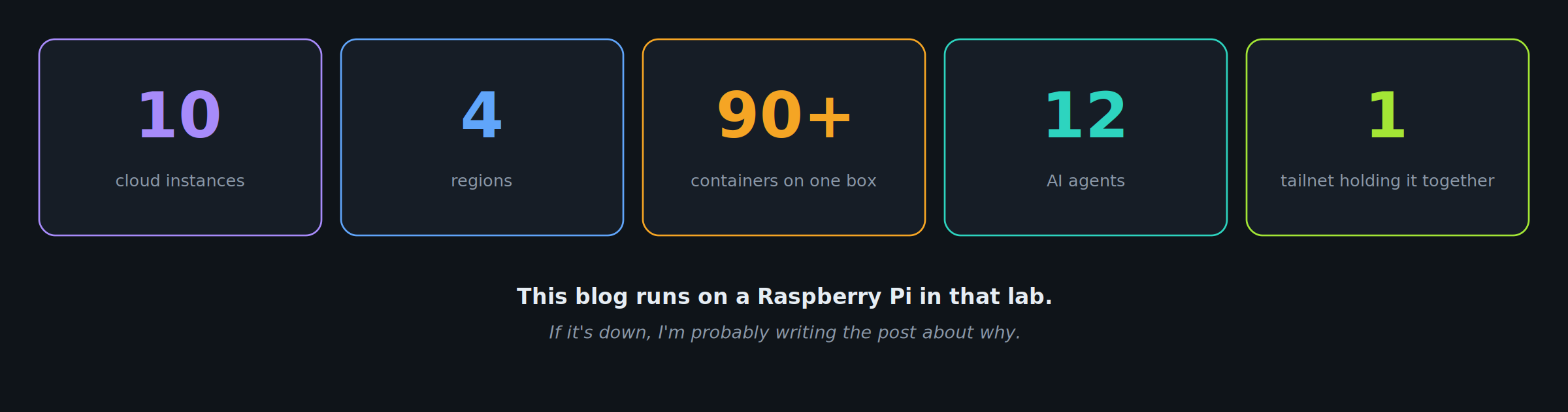
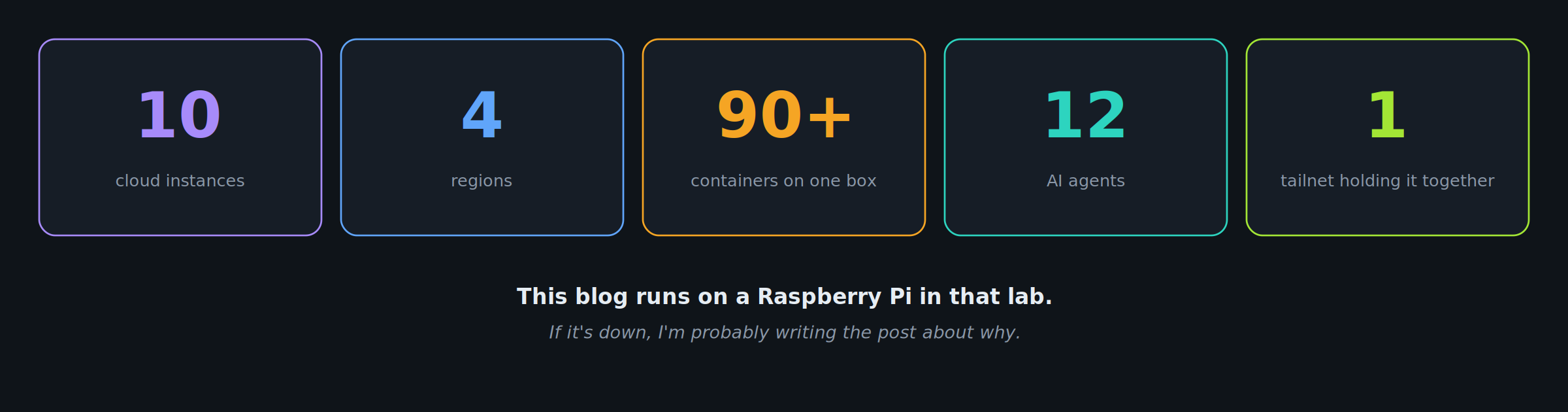
By day I'm a senior Kubernetes escalation engineer on a major cloud provider's containers team — the person who gets the tickets after the tickets. By night (and, honestly, most weekends) I run a homelab that got a little out of hand: a Proxmox box, a bunch of Raspberry Pis that never sleeps, a bag of travel routers, ten free-tier cloud servers on two continents, and a fleet of AI agents that help keep it all running.
This blog is where I write it all down.
How I got here
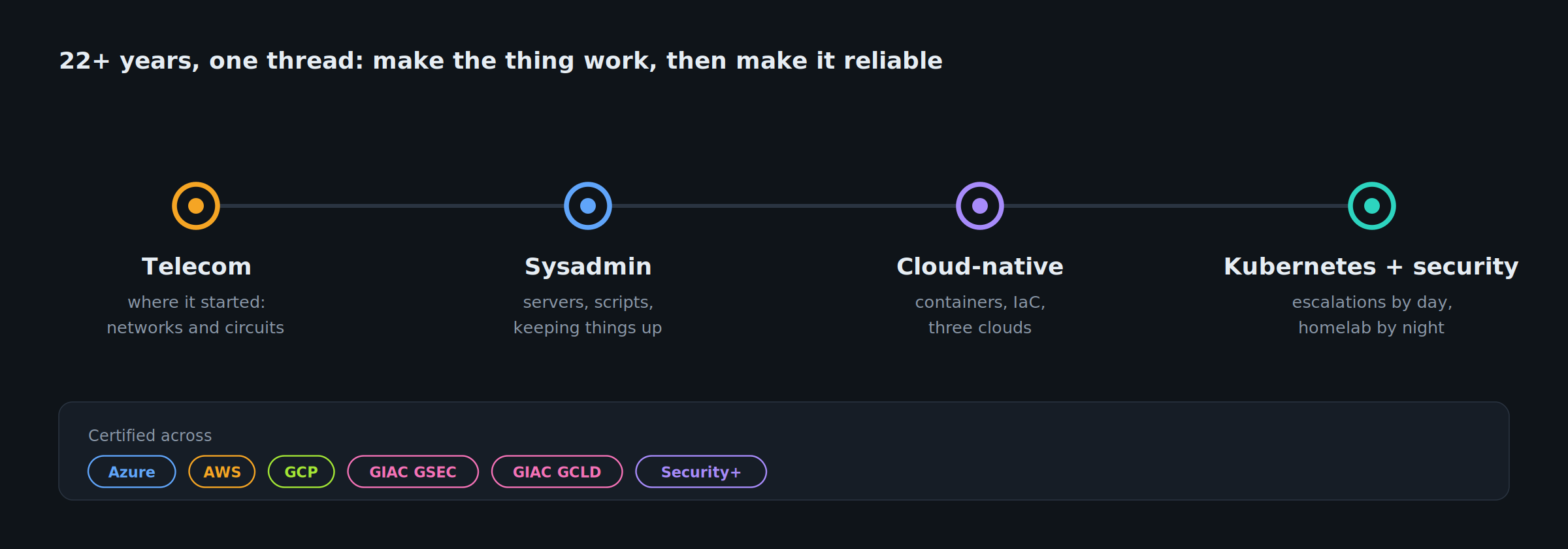
While I've always been a tinkerer and on the computer, I didn't start in the cloud. Professionally, I started in telecom, moved into systems administration – it was already a hobby why not. I then worked my way into cloud-native engineering — containers, infrastructure as code, and eventually Kubernetes. Security was also strong in my background early on. Along the way I picked up certifications across Azure, AWS and Google Cloud, plus GIAC GSEC, GIAC GCLD, and Security+.
The thread through all of it: make the thing work, then make it reliable, then make it so the next person understands it.
What you'll find here
How I write
- Real systems, real mistakes. If something took me three tries, you'll see all three.
- Honest about status. I mark what's running, what's half-done and what's still a plan.
- Security-minded by default. I describe machines by what they do, not what they're called, and I scrub addresses, IDs and ports from everything, fellow tinfoil hat wearer?
- Code you can use. Snippets are there to be copied — adapt them to your own setup.
How this site is built
Fittingly, it runs in the lab: Ghost on a Raspberry Pi, reached through a tunnel instead of an open port, with a theme I'm building myself. If the site is ever down, there's a decent chance I'm writing the post about why.
Say hello
Subscribe to get new posts by email, or reach me here:
- LinkedIn — linkedin.com/in/jamaal-goode
- Git — goodelyfe
- Email — me@jgoode.dev
Opinions here are my own and don't represent my employer. Everything described runs on my own time, on my own hardware and free-tier accounts.